
Forex Trading Full Course in Urdu PDF for Pakistani Traders
📘 Discover Forex Trading Full Course in Urdu PDF tailored for Pakistani traders. Learn strategies, risk management, and tips to trade confidently in Pakistan's market.
Edited By
Amelia Price
Forex trading is increasingly popular among Pakistani traders looking to earn through currency markets. However, success demands more than just guessing price moves. This guide offers practical forex trading strategies explained in Urdu, designed specifically for Pakistanis who want to understand how the currency market works and trade confidently.
The forex market is open 24 hours a day, five days a week, with currencies like USD, EUR, GBP, and PKR exchanging hands worldwide. Pakistani traders must appreciate currency pair dynamics, especially considering the rupee’s sensitivity to local factors like SBP policies, trade balances, and political events.
Trading strategies help you decide when to enter and exit trades, manage risks, and increase your chances of profit. They range from simple trend-following systems to advanced techniques employing technical indicators such as moving averages or RSI.
Strong risk management is vital. Without it, even the best strategies may lead to heavy losses. Proper stop-loss orders and controlled leverage use protect your capital.
This guide covers:
Basic principles of forex trading
Key strategies suited for different market conditions
Risk management tools you must apply
Useful trading platforms widely accessible in Pakistan
By following tested approaches and adapting them to personal trading styles and risk appetite, Pakistani traders can increase their chances of success and avoid common pitfalls. As you move forward, remember real trading requires discipline, patience, and continuous learning.
Let’s explore how you can get started and build trading tactics that suit your goals and lifestyle in Pakistan’s unique financial environment.
Grasping the basics of forex trading is essential before diving into Pakistan's currency market. A clear understanding helps you spot trading opportunities, manage risks, and avoid costly mistakes. For traders, whether beginners or experienced, this foundation shapes the path to consistent profits.
Forex, short for foreign exchange, is the market where currencies are exchanged. Traders buy one currency and sell another simultaneously; this pair trading is the core principle. For example, if you buy the USD/PKR pair, you are buying US dollars and selling Pakistani rupees. Currency pairs reflect the value of one currency relative to another, which moves constantly based on various factors like economic data or geopolitical events.
The global forex market operates 24 hours, five days a week, allowing traders worldwide to participate anytime. Major financial centres like London, New York, Tokyo, and Singapore keep this market fluid. Within Pakistan, the forex market is linked through authorised dealers, banks, and brokers regulated by the State Bank of Pakistan (SBP) and Pakistan Telecommunication Authority (PTA). While international news impacts PKR exchange rates, local economic policies and current affairs have a strong effect on market behaviour here.
A pip is the smallest price change in a currency pair, often 0.0001 for most pairs, critical for measuring profit or loss. A lot defines the trade size—standard lots represent 100,000 units of the base currency, but mini or micro lots are also common, helping beginners trade smaller amounts. Leverage allows you to open bigger positions than your actual capital, like 1:50 or 1:100, but it can magnify both gains and losses. The spread is the difference between the buying and selling prices; lower spreads often mean lower trading costs, so it’s important when choosing brokers in Pakistan.
Central banks, especially the State Bank of Pakistan, influence currency markets through interest rate changes and monetary policies. When SBP adjusts the policy rate, it can strengthen or weaken the PKR by affecting investor sentiment and capital flows. For example, raising rates might attract foreign investment, strengthening PKR, whereas cutting rates can do the opposite. Traders watch SBP announcements closely, as they often trigger sharp price moves in the USD/PKR pair.
Understanding these terms and market mechanisms helps Pakistani traders navigate forex more confidently and make informed decisions based on real market cues, rather than guesswork.
By mastering these fundamentals, you set up a solid base to explore various forex trading strategies tailored to Pakistan’s economic environment and your personal goals.
Popular forex trading strategies help traders in Pakistan and worldwide to navigate the complex currency markets with more confidence. These strategies offer a framework, allowing you to approach trades with clear rules rather than guesswork. Understanding them helps reduce emotional trading and improves the chances of consistent gains. For Pakistani traders, it’s especially important to choose strategies that fit local market hours, currency pairs involving the Pakistani rupee (PKR), and economic conditions.
How scalping works: Scalping requires opening and closing trades within minutes or even seconds aiming for tiny profits from small price movements. Traders using this approach rely on high volumes and rapid execution. It suits those who can monitor the screen actively and don’t mind a fast-paced environment. This method is practical for busy markets like during London or New York sessions.
Best conditions and currency pairs for scalping: Scalping works best in pairs with tight spreads and good liquidity, such as EUR/USD, GBP/USD, or USD/JPY. For Pakistani traders, USD/PKR might not always offer sharp scalping opportunities due to lower liquidity outside market hours. Instead, scalpers may look at major global pairs during their trading sessions. Stable economic conditions with minimal unexpected news releases also help, as surprises create volatility that may slip stop-losses.
Basics of swing trading: Swing traders hold positions from a few days to a couple of weeks, aiming to capture medium-sized price moves. Unlike scalping, it requires less screen time and focuses on market momentum. This strategy suits those who have a day job or other commitments but still want to trade actively.
Setting entry and exit points: Successful swing trading depends on spotting clear support and resistance zones. Traders use price action, candlestick patterns, and sometimes technical indicators to decide when to enter or exit. For example, entering near a support level with a stop-loss just below it manages risk, while profit targets sit near the next resistance. Using oscillators like RSI confirms overbought or oversold conditions for better timing.
Identifying trends in forex charts: Trend followers aim to ride the market in one direction, up or down, as long as it lasts. Identifying whether an uptrend or downtrend is in play involves observing higher highs and higher lows for uptrends, or lower lows and lower highs for downtrends. This approach works well in markets showing persistent moves rather than choppy sideways action.
Using moving averages and trend lines: Moving averages smooth price data to highlight trends clearly. Common settings like the 50-day and 200-day moving averages help identify when a trend starts or ends. For instance, when the 50-day crosses above the 200-day, the market might be turning bullish. Additionally, drawing trend lines connecting successive highs or lows aids in spotting potential reversals or breakout points.
How interest rate differentials work: Carry trade involves borrowing in a currency with a low interest rate and investing in one with a higher rate to profit from the difference. For example, if Pakistan's interest rates are higher than the US’s, traders might buy PKR against USD to earn the interest gap, also known as the "carry." This can produce steady returns in stable markets.
Risks associated with carry trades: Carry trades expose traders to sudden currency moves that can wipe out gains. If the currency borrowed starts appreciating or if political/economic turmoil hits, losses mount quickly. For Pakistani traders, volatility in PKR due to economic news or SBP monetary policy changes can increase risks, so close monitoring and risk limits are essential.
Mastering these strategies with clear money management plans lets you adapt to changing market conditions and make informed decisions rather than relying on luck or gut feelings. Pakistani traders can combine these methods with local market insights to develop realistic, workable approaches to forex trading.
Managing risk is the backbone of long-term success in forex trading, especially for Pakistani traders dealing with volatile markets and currency fluctuations. Without proper risk control, even the best strategies can lead to significant losses. Protecting your capital ensures you stay in the game longer, giving you more chances to profit.
Position sizing and stop-loss orders are two essential tools in managing risk. Position sizing means deciding the right amount of your capital to invest in a single trade. For example, if you have Rs 100,000 and choose to risk 2% per trade, you'll limit your loss to Rs 2,000 on that trade. This keeps losses manageable and avoids wiping out your account quickly. Stop-loss orders are automatic instructions to exit a trade if the price moves against you by a set amount. Using stop-losses stops emotions from driving decisions and prevents runaway losses, which is especially important when the PKR shows sudden swings.
Setting realistic profit targets balances the reward against risk in every trade. Unrealistic targets may encourage risky behaviour or impatience. Pakistani traders often aim for a risk-to-reward ratio of at least 1:2, meaning if they risk Rs 1,000, the target profit should be Rs 2,000 or more. This approach builds consistent growth over time rather than chasing quick but risky wins. By setting achievable goals based on market conditions and the currency pair's volatility, you avoid common mistakes like holding losing trades too long or exiting profitable trades too early.
Leverage lets traders control larger positions with a smaller amount of money, which can multiply gains but also magnify losses. For instance, using 1:100 leverage, a Rs 1,000 investment controls Rs 100,000 worth of currency. While this promises higher profits, a 1% adverse move in the currency could wipe out your entire Rs 1,000. Pakistani traders often find leverage tempting but lack caution, which can quickly scar the trading account.
Beginners should opt for safe leverage limits to protect capital from wild swings. A leverage ratio of between 1:10 and 1:20 is generally safer for those starting out. This lowers the risk of large losses on small market moves, allowing the trader to focus on learning strategies rather than fighting for survival in the market. As experience grows, you can cautiously increase leverage while always using stop-loss orders and position sizing to keep risks under control.
Managing risk means managing your future in forex trading. Without protection of your capital, even the best ideas won’t last long in Pakistan’s choppy currency markets.
Employ these risk management methods thoughtfully to trade forex in Pakistan with confidence and control.
For Pakistani forex traders, using the right tools and resources can make a significant difference in trading outcomes. These tools help analyse price movements, monitor economic conditions, and test trading strategies without risking real money. Given the volatile nature of forex markets and the unique challenges in Pakistan's financial environment, reliable resources are crucial to make informed decisions and manage risks effectively.
Several charting platforms are popular among Pakistani traders for technical analysis. MetaTrader 4 (MT4) and MetaTrader 5 (MT5) remain widely used due to their user-friendly interface and availability through local brokers. Additionally, TradingView is gaining popularity for its web-based charts and social trading features. These platforms support multiple currencies and offer real-time price data essential for timely trade execution.
Technical analysis indicators are key for spotting trends and entry points. Moving averages, Relative Strength Index (RSI), and Bollinger Bands are commonly applied. For example, the 50-day and 200-day moving averages help identify long-term trends, while RSI indicates overbought or oversold conditions. Pakistani traders often combine these tools with local market insights to fine-tune their strategies.
Several economic factors impact the Pakistani Rupee (PKR) and forex market dynamics. Inflation rates, trade deficit numbers, and foreign direct investment (FDI) reports are closely watched. For instance, a widening trade deficit usually weakens PKR, affecting currency pair prices involving PKR.
Additionally, the State Bank of Pakistan (SBP) policies are a vital focus. Changes in the SBP’s policy rate influence liquidity and the interest rate differentials in carry trades. Announcements about foreign reserves levels and currency intervention strategies also signal potential PKR movements. Staying updated with SBP's official statements helps traders anticipate market shifts.
Practice trading using demo accounts provided by brokers is invaluable. Pakistani traders can experience live market conditions without risking capital, enabling them to learn platform mechanics and develop confidence. This hands-on practice helps avoid costly mistakes when moving to real money trading.
Backtesting strategies involves applying a trading plan to historical price data to evaluate effectiveness. This method helps verify if an approach would have worked well in the past Pakistani market conditions, saving time and money. Tools like MT4 and TradingView support backtesting features, allowing adjustments before real trades. Backtesting combined with demo practice forms a sound preparation process.
Leveraging the right tools and reliable resources equips Pakistani forex traders to navigate market complexities with more precision and less risk, turning knowledge into profitable action.
📘 Discover Forex Trading Full Course in Urdu PDF tailored for Pakistani traders. Learn strategies, risk management, and tips to trade confidently in Pakistan's market.
📈 Start forex trading in Pakistan with this practical guide! Learn to pick brokers, set accounts, master strategies, manage risks, and navigate legal rules confidently.
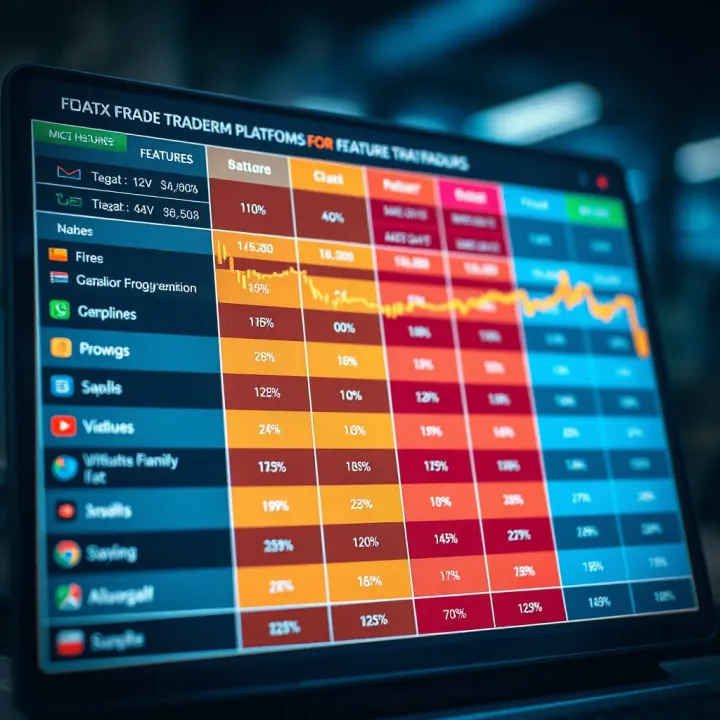
Discover how to choose the best forex trading platform for Pakistani traders 🇵🇰. Compare features, fees, and tools to succeed in Pakistan’s forex market 📈.
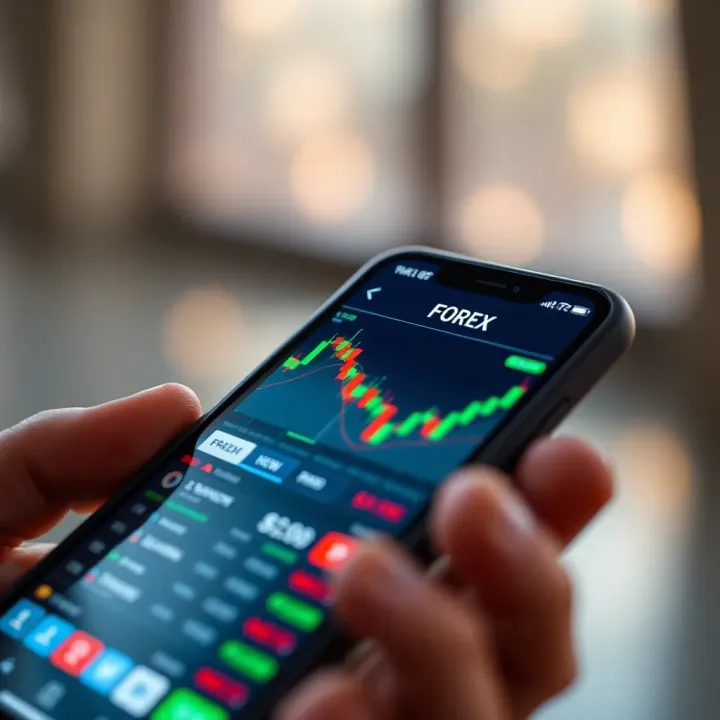
Discover how to pick the best forex trading apps in Pakistan 📱. Learn about essential tools, regulations, and tips to trade smarter on mobile platforms.
Based on 7 reviews