

How Risk Management Boosts Business Success
Discover how smart risk management enhances decision-making, boosts financial stability, and drives growth in businesses and beyond 🛡️📊🌍.
Edited By
James Whitaker
Risk management is the process that helps organisations identify, evaluate, and reduce threats that could disrupt their normal operations. In Pakistan, where business environments face unique hurdles like economic fluctuations, political instability, and frequent loadshedding, managing risks strategically is more than just a formality—it’s vital for survival.
For traders and investors, understanding risk management means recognising potential pitfalls early. For example, currency volatility can affect profit margins when dealing with imports or exports. A sudden sharp depreciation in the rupee might increase costs significantly if a trader hasn’t hedged properly. Students and freelancers also encounter risks, such as payment delays or contractual uncertainties, which risk management techniques can mitigate.
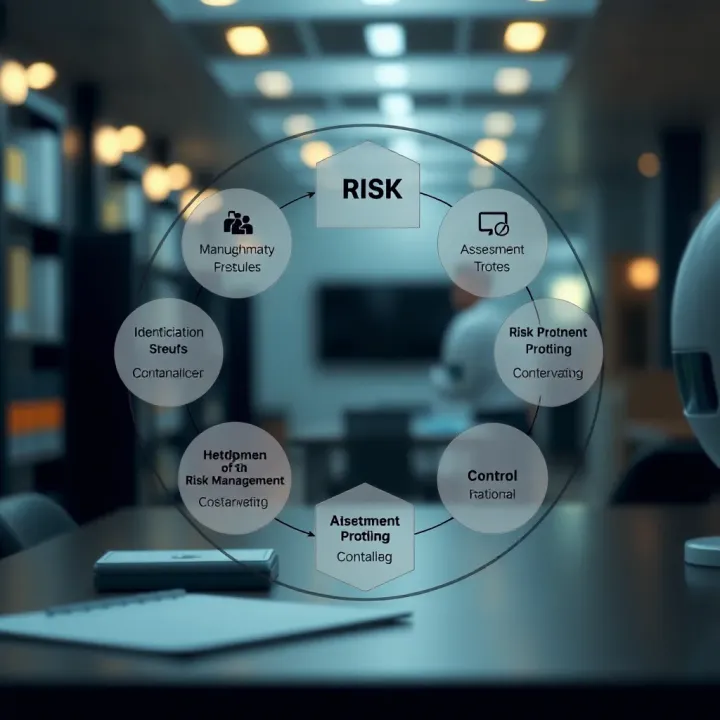
Risk Identification: Spotting risks relevant to your business or activity. For instance, a Karachi-based textile manufacturer might identify energy shortages or supply chain delays as major risks.
Risk Assessment: Measuring the likelihood and impact of each risk. This step helps prioritise which risks need immediate attention.
Risk Control: Implementing actions to reduce or eliminate the risks. It could involve diversifying suppliers to avoid disruption or using mobile payments like JazzCash to ensure faster invoicing and collection.
Risk management isn't limited to financial threats; it includes operational, strategic, legal, and reputational risks. For example, ignoring local regulatory changes from SECP (Securities and Exchange Commission of Pakistan) can lead to heavy fines or business restrictions.
"A practical risk management plan builds resilience. It reduces surprises, improves decision-making, and safeguards resources."
In Pakistan’s dynamic market, businesses can’t afford to overlook risks. Different industries require tailored approaches. A software startup in Lahore will face different risks compared to a farming business in Punjab’s rural areas.
Applying risk management techniques, such as scenario analysis, contingency planning, or insurance cover, allows organisations and individuals to prepare better for uncertainties. Especially in times of currency depreciation, interest rate hikes by the State Bank of Pakistan (SBP), or policy changes, having a systematic risk management framework guides sound choices.
This article breaks down key concepts and practical steps to implement an effective risk management plan customised for Pakistan’s environment, helping traders, investors, and professionals handle risks confidently and reduce potential losses.
Defining risk management clearly is vital because it sets the foundation for understanding how organisations handle the uncertainties that come their way. In today’s volatile business environment, being precise about what risk management entails helps traders, investors, and business leaders make informed decisions to safeguard their assets and future.
Risk management refers to identifying, assessing, and controlling potential events or situations that could negatively affect an organisation’s goals. The main objective is to minimise the impact of threats while maximising opportunities. For example, a Pakistani exporter facing fluctuating currency rates must manage foreign exchange risk to protect their profit margins.
While risk involves situations where probabilities of different outcomes are known or can be estimated, uncertainty refers to scenarios where such information is unavailable or unreliable. Traders on the Pakistan Stock Exchange (PSX) deal with risk because market patterns allow for some analysis, but uncertainty arises during political instability or unexpected regulatory changes, where outcomes are unpredictable.
Organisations must protect their physical assets and reputation to retain their position in the market. For instance, a textile factory in Faisalabad could face machinery breakdowns or labour strikes; effective risk management ensures quick responses to reduce damage. Equally, mishandling risks can harm a company’s reputation, impacting investors’ trust and customer loyalty.
Beyond preventing losses, risk management prepares businesses to continue operations smoothly despite disruptions. Loadshedding is a common challenge in many Pakistani cities. Companies that invest in backup generators or alternative power sources demonstrate practical risk management ensuring they remain functional even during power outages.
Clear understanding and application of risk management are essential to maintaining stability and competitive advantage amid Pakistan’s unique economic and operational challenges.
This clarity empowers businesses, investors, and freelancers alike to approach risks smartly, ensuring long-term growth and resilience.
Businesses in Pakistan and beyond navigate through a variety of risks that can significantly impact their operations and profitability. Understanding these risks helps companies prepare better, make informed decisions, and safeguard their resources.
Market risk and credit risk relate to the uncertainties in the financial markets and the possibility that borrowers may default on loans. For instance, a company investing in equities on the Pakistan Stock Exchange might face market risk if share prices suddenly fall due to political instability or global economic shifts. Credit risk becomes crucial for firms extending credit or relying on loans; if customers or partners fail to repay on time, it disrupts cash flow and can lead to losses.
Currency and liquidity risks also heavily affect businesses, especially those involved in import-export or dealing in foreign currency. The Pakistani rupee's fluctuating exchange rate against the dollar or other currencies can inflate costs unexpectedly. Similarly, liquidity risk arises when a business cannot access enough cash or easily convert assets into cash to meet short-term obligations. During tight economic periods, organisations may struggle to access bank financing or convert stock into cash quickly, putting strain on daily operations.
Internal process failures happen when business systems or procedures break down. This could be a manufacturing defect causing product recalls or delays in order processing due to poor coordination. For example, a textile factory missing quality checks might face customer complaints and damage to reputation, highlighting how vital these internal controls are.

Technology and human errors are everyday risks in modern businesses. A software glitch in accounting systems or human mistakes such as inputting wrong data can cause financial discrepancies and operational delays. In Pakistan, where technology adoption grows rapidly, ensuring staff are well-trained and systems regularly updated prevents costly mistakes.
Legal and regulatory challenges concern adhering to laws, licences, and tax rules. Pakistani firms must keep up with Federal Board of Revenue (FBR) tax regulations to avoid fines or audits. Changes in labour laws or import/export restrictions also pose risks that can disrupt business plans if not managed carefully.
Competition and market changes reflect the evolving business environment. A new player entering the market or shifts in consumer preferences can weaken market share. For instance, the rise of e-commerce platforms in Pakistan demands traditional retailers to rethink strategies to stay relevant.
Natural disasters and geopolitical issues significantly affect Pakistani businesses. Floods during monsoon season or tensions at border areas can halt transportation routes and damage infrastructure. Businesses in vulnerable locations must factor these possibilities into their risk management plans.
Supply chain disruptions cause delays and increase costs. Many Pakistani manufacturers rely on raw materials imported from overseas. Disruptions due to port delays, customs issues, or global shortages can halt production lines. The COVID-19 pandemic underlined this risk on a global scale, including Pakistan’s import-dependent sectors.
Identifying these risk types allows businesses to tailor safeguards, ensuring they not only survive shocks but also maintain steady growth in a complex environment.
In summary, recognising financial, operational, strategic, compliance, and environmental risks enables Pakistani organisations to develop practical, effective responses to protect their interests and remain competitive.
The risk management process guides organisations in identifying and handling threats that could disrupt operations or harm assets. Understanding this process helps you cut through uncertainty and make decisions that protect your interests. Each step—from spotting risks to responding and reviewing—is essential for sound risk management.
Techniques to recognise risks involve actively searching for potential hazards within various parts of the business. This might include brainstorming sessions, surveys, or interviews with staff to pinpoint weak spots. For instance, a Karachi-based trading firm could identify currency fluctuations as a risk by reviewing past financial records and market trends.
Using risk registers helps keep track of identified risks systematically. These registers list each risk, its possible causes, and potential impact. Companies can update registers regularly to stay on top of new risks. This tool is especially useful for freelancers managing multiple projects to monitor client payment risks or delivery delays effectively.
Qualitative versus quantitative methods provide different ways to understand risks. Qualitative approaches rely on descriptions and expert opinions, which are handy when precise data is unavailable. Quantitative methods use figures and statistical models, such as calculating potential losses in rupees due to market crashes, offering a clearer picture for financial analysts.
Assessing likelihood and impact means estimating the chance of a risk occurring and the damage it may cause. For example, a logistics company in Lahore might assess the likelihood of a strike halting operations and the impact on delivery schedules. This assessment directs focus on the risks that require urgent action.
Risk avoidance, reduction, transfer, and acceptance are strategies to manage threats. Avoidance means steering clear of risky activities, while reduction involves steps to lessen the chance or impact of risk. Transfer shifts risk, often to insurance companies. Acceptance acknowledges some risks are unavoidable, so plans accommodate them. For example, a food delivery startup might reduce risk by investing in generator backup against loadshedding.
Choosing suitable mitigation strategies depends on the type of risk and available resources. It’s practical to weigh the cost of controls against potential losses. A startup might choose insurance for theft risks and invest in staff training to reduce operational errors. Careful selection ensures efficient use of funds and better protection.
Ongoing risk assessment involves regularly checking existing risks and scanning for new ones. This suits investors tracking market volatility or traders watching global events that impact the stock exchange. Continuous effort helps catch threats early.
Adjusting plans based on feedback means learning from experiences and changing strategies when needed. If a business finds that accepted risks cause more harm than expected, it may revisit its approach. A textile firm might modify supplier contracts after supply chain disruptions during floods, ensuring stronger safeguards for next time.
Consistently following these steps turns risk management into a proactive practice, helping Pakistani businesses withstand challenges and seize opportunities with confidence.
Effective risk management depends heavily on using the right tools and techniques to identify, evaluate, and respond to risks. These methods help organisations make informed decisions and allocate resources where they matter most. In the Pakistani business context, selecting practical and relevant tools can mean the difference between surviving shocks like currency fluctuations or loadshedding and faltering under pressure.
Mapping risk severity through matrices provides a visual and straightforward way to assess risks. The matrix typically plots two dimensions: the likelihood of a risk occurring and its potential impact. Using a simple colour-coded grid — such as red for high risk, yellow for medium, and green for low — allows decision-makers to quickly prioritise risks needing immediate attention.
For example, a textile exporter in Karachi might use a risk matrix to assess the impact of sudden port closures during monsoon floods. The likelihood might be medium, but the potential financial impact high, categorising it as a critical risk requiring mitigation. This practical approach helps Pakistani businesses focus limited resources on the biggest threats without getting lost in details.
Scenario analysis prepares organisations for worst-case situations by imagining extreme but plausible events. This technique helps businesses plan reactions in advance, reducing panic and delays during crises. Stress testing involves pushing financial or operational systems beyond usual limits to see how they perform under severe conditions.
In Pakistan's volatile economic environment, scenario analysis might involve testing the impact of a sharp rupee devaluation or politically driven regulatory changes. For banks and investors, stress testing loan portfolios against such shocks ensures they maintain adequate buffers. Operationally, companies may stress test supply chains to withstand transport disruptions caused by strikes or heavy rains.
Insurance plays a vital role in transferring risk by shifting financial burdens to insurers. Pakistani businesses rely on policies covering fire, theft, and liability to protect assets and operations. Proper insurance limits help firms avoid crippling losses from unexpected events.
On the financial front, options and hedging allow companies to manage market risks like currency fluctuations or commodity price swings. For instance, an importer in Lahore might hedge against PKR depreciation by engaging in forward contracts. These tools reduce uncertainty, helping businesses stabilise cash flows even amid Pakistan's unpredictable economic landscape.
Choosing relevant risk management tools is not a one-size-fits-all exercise. Practical application considering local challenges like infrastructure bottlenecks, regulatory changes, and market volatility is key to safeguarding business interests effectively.
By combining matrices, scenario planning, and financial instruments, Pakistani entrepreneurs and investors can build resilience against the range of risks they face in day-to-day operations and long-term growth.
Risk management holds particular significance in Pakistan due to the nation’s unique economic, political, and infrastructural challenges. Businesses here face a landscape where volatility is more the norm than the exception. Effective risk management helps companies prepare for uncertainties, limiting losses and protecting growth potential.
Pakistan’s economy experiences frequent fluctuations influenced by global commodity prices, currency depreciation, and inflation. For instance, the Pakistani rupee’s sharp swings against the US dollar complicate financial forecasting for import-dependent businesses. Companies without proper risk management may face unexpected cost increases, impacting profitability.
Furthermore, businesses must navigate a regulatory environment that is still evolving, with frequent updates to taxation and compliance requirements. The Federal Board of Revenue (FBR) has intensified its focus on tax collections, making compliance risks more pronounced. Non-compliance or errors in tax filings can lead to hefty fines or operational disruptions, stressing the need for thorough risk assessments related to FBR regulations.
One of the most immediate operational risks is loadshedding, which disrupts manufacturing lines and retail services alike. Without contingency strategies such as backup generators or alternative working hours, businesses suffer direct financial losses and damage their reputation among customers.
Political instability and security concerns also weigh heavily on investment confidence. Fluctuating government policies or security incidents can delay project timelines or affect supply chains. For example, frequent political protests in major cities like Karachi and Lahore may halt business activities temporarily, requiring firms to build risk buffers in their operational models.
Implementing a solid risk management framework supports sustainable growth by enabling businesses to absorb shocks and adapt quickly. When companies factor in known risks like currency volatility or infrastructure lapses, they plan capital and resources more efficiently, ensuring steady development even in uncertain times.
Additionally, effective risk management boosts investor confidence. Investors and financial institutions often seek companies that demonstrate preparedness and resilience. Pakistani businesses with strong risk controls tend to attract more favourable credit terms, foreign investment, and partnerships, which directly impact their market standing.
Managing risks with a local lens is not just about avoiding losses; it’s about turning challenges into manageable factors for long-term success.
In short, Pakistani businesses that acknowledge and actively manage their risk environment gain a competitive edge in both local and international markets.
Implementing a risk management plan is essential for any organisation wanting to handle uncertainties effectively. It turns theory into action by setting clear goals, defining responsibilities, and ensuring everyone knows their role in managing risks. Without a proper plan, even the best risk assessments can fall short because there is no structured way to act on them.
Defining risk appetite means deciding how much risk an organisation is willing to take. This is practical because without knowing risk tolerance, businesses may either avoid all risks, missing growth chances, or take on excessive risks that threaten their survival. For example, a fintech startup in Karachi may accept higher risk to innovate quickly, while a manufacturing company in Faisalabad might prefer a conservative approach due to heavy capital investment.
Assigning roles in risk oversight means clearly defining who is responsible for identifying, monitoring, and responding to risks. This avoids confusion and overlaps, which often cause delays or missed risks. In Pakistani firms, assigning a dedicated risk officer or a committee ensures there is accountability. For instance, a textile exporter might have separate teams for compliance risks and operational risks, reporting regularly to senior management.
Building risk awareness across teams helps everyone understand the risks relevant to their tasks and the importance of managing them. When employees in all departments—from sales to logistics—are trained, they can spot potential threats early. A Lahore-based retail chain, for example, may conduct workshops on fraud prevention for front-line staff, reducing economic risks.
Regular reporting and updates keep risk management dynamic rather than static. The environment changes fast, especially in Pakistan’s uncertain political and economic climate. Frequent reports help leadership make informed decisions, adjust strategies, and communicate risks to stakeholders. Monthly risk dashboards or alerts on key issues like currency fluctuations can be very effective.
Software and digital tools available make risk tracking and analysis easier and more accurate. Solutions like SAP GRC or local software tailored for Pakistani businesses help in consolidating data, automating reports, and maintaining risk registers. Smaller firms may use cloud-based tools to keep costs low but still gain real-time insights.
Advantages of automation include reducing human error, saving time, and enabling continuous monitoring. Automated alerts for limits breaches, automatic updates from external data (like market or regulatory changes), and integration with business systems can create a proactive risk culture. For example, a Karachi-based bank using automated risk tools can respond faster to fraud attempts or compliance lapses.
A well-implemented risk management plan doesn't just protect businesses; it strengthens decision-making and supports long-term success, especially in challenging markets like Pakistan.
By focusing on clear objectives, effective communication, and smart use of technology, Pakistani businesses can handle risks calmly and confidently, improving their resilience amid uncertainty.
Discover how smart risk management enhances decision-making, boosts financial stability, and drives growth in businesses and beyond 🛡️📊🌍.

Explore practical risk management examples in business and daily life, from finance to healthcare, showing how to identify, assess, and handle risks effectively 🔍📊

📊 Plan risk management for projects by identifying threats, assessing impact, assigning roles, and using proven tools to manage uncertainties confidently in Pakistan.
📊 Explore how Pakistani businesses manage financial risks with tailored strategies, tools, and regulatory insight to safeguard their financial health amid economic challenges.
Based on 15 reviews