
Understanding Forex Trading for Pakistani Traders
📊 Understand forex trading essentials, market trends, risk management & Pakistan's regulations. A practical guide for Pakistani traders seeking informed currency trading success.
Edited By
James Harrington
Forex trading has captured the interest of many in Pakistan, especially with the rise of online platforms making currency exchange accessible from Karachi to Islamabad. However, trading real money right away can be risky without proper practice. This is where a forex trading demo account comes into play.
A demo account lets you trade currencies without using your own money. Instead, you use virtual funds to experience live market conditions. Think of it as a flight simulator for trading—allowing you to learn the controls, test strategies, and build confidence before taking off with real capital.
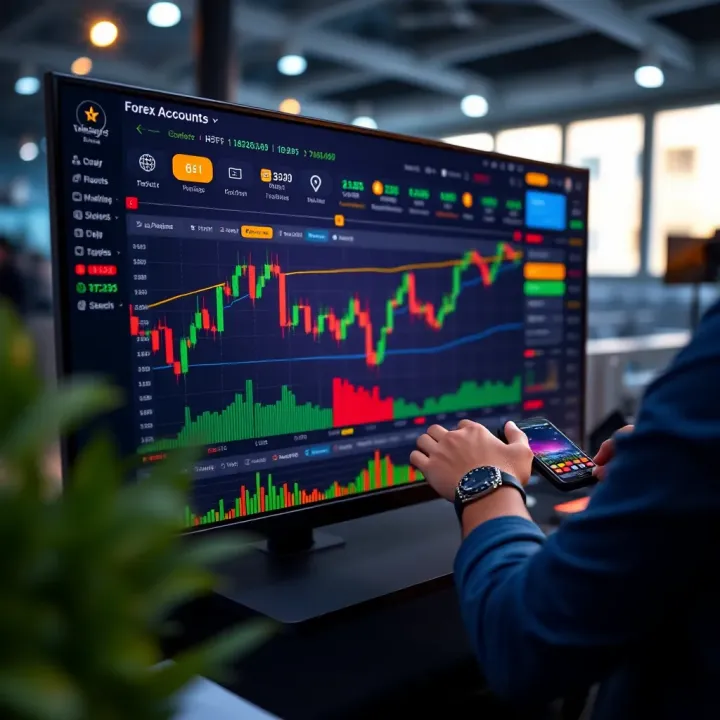
Pakistani traders benefit from demo accounts in several ways:
Risk-free learning: You avoid losing hard-earned rupees while becoming familiar with forex platforms.
Testing strategies: Whether you prefer scalping or swing trading, try your methods without pressure.
Understanding market dynamics: You can observe how economic news or geopolitical events influence currency pairs like USD/PKR or EUR/USD.
Setting up a demo account is straightforward. Most Pakistani forex brokers and global platforms offer free access after brief registration. You get a dashboard showing real-time prices, charts, and tools just like a live account.
Practising on a demo account sharpens your skills and reveals common mistakes before risking actual funds, an approach particularly wise given Pakistan's volatile PKR exchange rate.
To get the most out of your demo account:
Treat it as real trading—avoid careless orders.
Track your performance to identify strengths and weaknesses.
Move gradually towards live trading after consistent success.
This guide will help you understand how to set up and use your demo account effectively, avoid pitfalls like over-leveraging, and bridge the gap between virtual practice and real trading outcomes in Pakistan's unique forex environment.
A forex trading demo account is a practice platform that allows you to engage in currency trading without the risk of losing real money. It's especially valuable for Pakistani traders who are just starting and want to understand forex dynamics without financial exposure. Think of it as a flight simulator for pilots — it mimics the real trading environment closely but operates on virtual money.
A demo account is offered by most forex brokers to help traders get familiar with the platform and trading processes. Its main purpose is to provide hands-on experience without financial pressure. For example, you can try out different strategies, like trading the USD/PKR pair or EUR/USD, seeing how market movements affect your trades. This hands-on trial helps you build skills and confidence before committing real funds.
Beyond beginners, even experienced traders use demo accounts to test new techniques or explore unfamiliar currency pairs without risking capital. This proves especially useful if you want to understand how geopolitical events in Pakistan or economic changes in the US might affect the forex market.
Demo accounts replay actual market data, simulating price movements in real-time. This means when the US dollar strengthens or weakens against the Pakistani rupee, your demo account reflects those changes just as they happen in live markets. The fluctuation of bid-ask spreads and order books try to emulate real scenarios, so your trades experience similar timing and price shifts.
However, demo platforms sometimes fall short during volatile events, such as sudden news about Pakistan’s economic policies or unexpected global crises, where the real market might show slippage or temporary unavailability of prices. Still, for day-to-day learning, the simulated market conditions offer a very close approximation.
When you open a demo account, you receive virtual funds—often between $10,000 and $100,000—depending on the broker. These funds allow you to place trades, manage risk with stop-loss orders, and watch how your decisions play out without the fear of losing your hard-earned Rs.
The trading environment itself is a full replica of what a live account offers: access to charting tools, technical indicators, and various order types. This hands-on experience with the trading interface helps Pakistani traders familiarise themselves with broker platforms like MetaTrader 4 (MT4) or MetaTrader 5 (MT5). It also saves you from costly mistakes owing to unfamiliarity. For instance, practising placing a limit order or setting trailing stops in a demo will make actual trades smoother and more confident.
Using a demo account before real trading is like learning to drive in an empty parking lot — it’s safer, less stressful, and better for building your skills before facing real traffic.
By understanding what a demo account is and how it mimics actual trading, you prepare yourself to step into live markets with clearer expectations and fewer surprises.
Using a forex demo account offers practical advantages that Pakistani traders should not overlook. It provides a safe environment to understand the mechanics of currency trading without risking real money. For beginners and experienced traders alike, this platform allows thorough practice and strategic experimentation before committing capital.
A key benefit of demo accounts is the ability to learn and test strategies without financial risk. For instance, a trader in Karachi can try different currency pairs like USD/PKR or EUR/USD and observe how their strategies perform under various market conditions. The demo environment uses virtual funds, so mistakes cost nothing but offer valuable lessons. This setup encourages traders to try new approaches, fine-tune entry and exit points, and understand market behaviour before stepping into live trading.

Demo accounts help build confidence with real-time practice on trading platforms. Pakistani traders often face challenges with unfamiliar software interfaces or order execution types. Using a demo account, they can explore features like stop-loss orders, limit orders, and charting tools without pressure. This hands-on experience demystifies complex systems and prepares traders to manage orders effectively when dealing with actual funds. Getting comfortable with these tools in advance reduces anxiety and improves decision-making during volatile hours in markets like the London or New York sessions.
Choosing the right broker matters, and demo accounts let traders assess broker services without risking money. For Pakistanis, verifying a broker’s reliability, customer support quality, and trading conditions such as spreads and leverage is crucial. By opening a demo account, you can test execution speeds and platform stability during peak market activity. This practical evaluation helps avoid brokers that may have hidden fees or poor service, saving potential headache and losses once you move to live trading.
Demo accounts act as a training ground where traders gain essential skills and insight to approach live forex trading with preparedness and confidence.
In sum, forex demo accounts serve as the foundation for learning, practising, and evaluating both strategies and brokers. For Pakistani traders facing new financial landscapes and platform options, these accounts provide a valuable starting point that protects both funds and peace of mind.
Setting up a forex demo account is the first building block for anyone interested in currency trading, especially Pakistani traders. A properly configured demo account simulates real market conditions without risking real money, which helps you get comfortable with trading platforms and understand market dynamics firsthand. Given the specific challenges Pakistani traders face—such as fluctuating rupee rates, changing regulatory norms, and local broker reputations—setting up the demo account thoughtfully is essential.
When selecting a broker, checking their compliance with the State Bank of Pakistan (SBP) and Pakistan Telecommunication Authority (PTA) is crucial. Pakistan has strict rules about online forex trading; brokers should be transparent about legal licensing or local partnerships to avoid scams. PTA approval means the broker's platform is accessible through local internet and mobile networks without disruptions, which is vital because unreliable access can cause delays or missed trading opportunities.
For instance, some foreign brokers may not allow Pakistani traders or may get blocked by local ISPs resulting in slow connections. Therefore, always confirm if the broker supports Pakistani clients specifically and offers customer support in Urdu or English.
Brokers usually offer various account types tailored to different trading volumes and risk appetites. Pakistani traders should focus on account options with low minimum deposits—ideally under Rs 10,000—so that transition to live trading feels manageable. Look also for brokers with competitive spreads and flexible leverage options aligned with your risk tolerance.
For example, some brokers offer "micro" accounts with smaller lot sizes, which let beginners trade with less risk. Pay attention to commissions, overnight fees (swap), and whether the broker offers Islamic or swap-free accounts, as these can be critical considering local religious and financial sensitivities.
Opening a demo account usually involves a simple online registration process. You'll need to provide basic details such as name, email, and contact number, sometimes including CNIC or passport info for identity verification. Some brokers may also ask about your trading experience to personalise your demo setup.
This streamlined process allows Pakistani traders to quickly access the demo environment without lengthy paperwork, making it convenient to test multiple brokers and platforms before committing.
Most brokers offer demo accounts accessible through downloadable software like MetaTrader 4 or MetaTrader 5, which are popular in Pakistan. These platforms provide advanced charting tools and real-time price data, crucial for practising technical analysis.
Alternatively, many brokers now provide web-based trading platforms that work directly in browsers, eliminating download barriers. Web platforms are especially handy if you have limited computer storage or face connectivity issues caused by loadshedding.
Pakistani traders should choose the option that fits their device capabilities and internet stability. For example, if you're trading on a laptop with unreliable power supply, a web platform might serve better during outages.
Choosing the right broker and smoothly setting up your demo account establishes a solid foundation. It narrows down your options to reliable services and familiarises you with trading tools before risking any real money in Pakistan’s volatile forex market.
When you’re practising on a forex demo account, it’s essential to check out the key features that replicate real trading conditions. These features help you build skills and gain familiarity with the trading environment without risking your own cash. For Pakistani traders especially, who might be juggling fluctuating rupee exchange rates and the local economic backdrop, getting comfortable with these tools early is a big advantage.
Understanding different order types and the speed at which your trades execute is fundamental. Demo accounts let you experiment with common orders like market orders, limit orders, stop-loss, and take-profit. For example, you can place a limit order to buy USD/PKR only when the rate hits a certain level. This lets you see how the platform behaves when these orders are triggered.
Execution speed matters too because delays can mean missed opportunities or unexpected losses. Demo trading allows you to see if the broker’s system processes trades quickly—important in volatile markets. For instance, during sudden news events impacting the rupee, a fast execution can save your position. Practising this on a demo account familiarises you with any lag before you trade live.
Effectively reading charts and applying technical indicators is a skill every forex trader needs. Demo platforms provide access to charting tools showing price trends over minutes, hours, or days. Pakistani traders can use these to spot patterns for currencies like USD/PKR or EUR/PKR.
Technical indicators like Moving Averages, Relative Strength Index (RSI), and Bollinger Bands support decision-making. On a demo account, try combining these indicators to test strategies. For instance, an RSI below 30 might suggest oversold conditions, prompting a buy. This feature helps you get hands-on experience and sharpens your market reading ability without risking money.
Risk management separates successful traders from the rest. Demo accounts let you practise setting stop-loss and take-profit orders, essential for protecting your capital. For example, you might set a stop-loss to limit losses to Rs 5,000 on a trade.
You can also explore position sizing and leverage options on the platform. Pakistani regulations may influence available leverage, so it is useful to understand the restrictions early. Practising how changing your trade size affects risk prepares you for live trading.
Trying out these features on a demo account isn’t just about knowing the buttons. It’s about understanding how each function impacts your trading outcome, ensuring you are ready to handle real market challenges confidently.
Exploring order types, charting tools, and risk management options on your demo account helps build a solid foundation. It’s like a rehearsal before the actual performance, reducing shocks and increasing your chance of success in live forex trading.
Forex demo accounts offer a safe environment to learn trading basics and test strategies without risking real money. However, they fall short in replicating several key aspects of live market trading. Recognising these limitations helps Pakistani traders prepare for the realities of the financial markets.
Trading with virtual money removes the emotional tension that accompanies real financial risk. In a demo account, traders do not face the stress of losing actual capital or the excitement of real profit, which are strong psychological forces. For example, when trading Rs 100,000 in a live account, fear of loss or greed might affect decision-making, causing hesitation or impulsive moves. Such emotional challenges cannot be simulated in demo trading, leading many beginners to struggle emotionally when moving to live accounts.
Demo accounts often provide idealised trade executions with little to no slippage—the difference between expected and actual trade prices. In Pakistan's forex trading context, live markets, especially during volatile hours or news releases, can show high liquidity fluctuations. This can cause slippage or delayed order fills unlike demo environments. For instance, during major announcements like SBP interest rate decisions, live order executions can differ significantly from simulated ones, affecting profitability.
The combination of absent emotional pressures and ideal trade executions means that demo account profits often look better than they would in live trading. This disparity can mislead traders into overestimating their readiness. A strategy that works smoothly on a demo might fail under live conditions when faced with market unpredictability and trading costs such as spreads and commissions. Therefore, even a strong demo performance does not guarantee success in live forex trading without adapting to these real-world challenges.
Trading in a demo account builds foundation knowledge but understanding its limits is essential to avoid costly surprises when moving to live markets.
Pakistani traders should use demo trading as a stepping stone while mentally preparing for emotional discipline and adapting strategies to the real market's liquidity and execution conditions. This approach ensures a smoother transition and better long-term results.
Moving from a forex demo account to live trading is a critical step for any trader, especially in Pakistan where market conditions can be quite unique. This transition requires more than just knowing the technical aspects; it demands careful planning, emotional control, and a realistic approach to risk. The following tips focus on practical ways to make this shift smoother and more effective.
Starting live trading with a modest amount of real money helps manage risk while building valuable experience. For instance, if you have Rs 50,000 set aside for trading, begin with a fraction such as Rs 5,000 or Rs 10,000. This way, losses won’t feel devastating, but you still gain exposure to real market conditions like slippage and spreads that demo accounts cannot replicate fully. Many Pakistani brokers allow mini accounts precisely for this purpose, accommodating smaller investments without hefty margin requirements.
Discipline separates consistent traders from those who burn out quickly. Keep a trading journal where you record every trade’s details: entry and exit points, the reasons behind each trade, emotional state, and the outcome. This habit helps identify recurring mistakes or profitable strategies over time. For instance, if you notice impulsive trades during peak market hours cause losses, you can adjust your approach. Pakistani traders often overlook these details, but systematic record-keeping fosters better decision-making and reduces emotional trading.
Live trading demands staying updated with local economic events and news that impact currency pairs. Factors like changes in SBP monetary policy, political developments, or even energy load-shedding schedules can affect forex volatility. Regularly follow sources such as Dawn Business, the State Bank of Pakistan announcements, or international news affecting the PKR exchange rate. By integrating real-time information with your trading strategy, you develop a sharper sense of market pulse. This ongoing learning enhances your ability to anticipate moves rather than react to them.
Transitioning to live forex trading is a journey of continuous learning and adjustment. Starting small, staying disciplined, and being aware of local market signals can significantly improve your chances of long-term success.
Combining these tips with what you’ve practiced on demo accounts will build not just skill but also the confidence needed to navigate the Pakistani forex market effectively.
📊 Understand forex trading essentials, market trends, risk management & Pakistan's regulations. A practical guide for Pakistani traders seeking informed currency trading success.
📈 Start forex trading in Pakistan with this practical guide! Learn to pick brokers, set accounts, master strategies, manage risks, and navigate legal rules confidently.
Discover key steps in selecting reliable forex brokers in Pakistan 🇵🇰, explore types, account setup, platforms & regulatory tips to trade confidently 📈 with peace of mind.
🔍 Find the right forex indicator to boost your trading! Learn their pros and cons to match your style for smarter, clearer market decisions. 📈
Based on 5 reviews