
Binary to Hexadecimal Conversion Explained
Learn how to convert binary to hexadecimal with clear steps and tips 🧑💻. Explore practical uses in computing and electronics for programmers and IT pros.
Edited By
Charlotte Edwards
Binary translators play a key role in how computers and digital devices handle information. They convert data written in binary code—the language of ones and zeros—into human-readable text, images, sounds, or even back into binary form. This process enables everyday technology, from mobile apps to online banking, to function smoothly across Pakistan's growing digital infrastructure.
Binary code itself is the foundation of all computing devices. Every command, image, or file on your computer or smartphone exists as a long string of binary digits (bits). However, humans cannot interpret such code directly, so binary translators step in to convert this machine language into understandable formats and vice versa.
At its core, a binary translator maps specific sequences of ones and zeros to meaningful characters or instructions. For example, the ASCII standard uses binary codes to represent alphabet letters, numbers, and symbols. A translator reads binary input like "01000001" and converts it to the letter "A".
Different types of binary translators serve various purposes:
Text Translators: Convert binary to readable text and vice versa, useful in encoding and decoding messages.
Data Format Translators: Convert binary data into formats like images, audio, or video playable on devices.
Software Translators: Help run programs designed for one platform on another by converting binary instructions.
In Pakistan, these translators power everything from mobile services—such as JazzCash or Easypaisa transactions—to data communication protocols used by internet service providers and telecom companies like PTCL and Jazz.
Understanding binary translation is essential to grasp how digital information flows effortlessly between machines and users, forming the backbone of Pakistan’s fast-expanding tech scene.
Businesses rely on binary translators to process encrypted financial data securely. Freelancers who develop software or apps often engage with translators for debugging or ensuring compatibility. Students and analysts working with data sets use binary translators to convert raw data into charts, reports, or programming inputs.
By shedding light on these tools, you can better appreciate how your daily interactions with technology, from WhatsApp chats to online payments, depend on accurate binary data conversion. This understanding also highlights opportunities in fields like software development, cybersecurity, and data analytics, all of which are growing in Pakistan’s digital economy.
Binary code sits at the heart of all digital computing, making it essential to understand its basics when discussing binary translators. Computers represent data using only two symbols: 0 and 1. This simple system forms the foundation for everything from phone apps to stock market algorithms.
Binary code consists of just two digits — zero and one. These digits, or bits, act like tiny switches that are either off (0) or on (1). This straightforward approach lets computers process instructions efficiently. Think of 0s and 1s as simple yes/no answers that, when combined in sequences, can represent complex data like letters, numbers, or commands.
Digital devices convert all kinds of information—be it text, images, or sound—into binary sequences. For example, the letter 'A' is represented in ASCII code as 01000001. When your computer reads this binary pattern, it understands which character to display. This uniform method allows diverse data types to be processed, stored, and transmitted reliably across networks.
Computers rely on electrical signals that have two distinct states: high voltage and low voltage. These align perfectly with binary’s 1s and 0s. Using just two states simplifies hardware design, reducing errors and power consumption. For instance, a microprocessor circuit interprets a high voltage as 1 and low voltage as 0, ensuring clear and unambiguous data processing.
Binary's simplicity bolsters reliability in computing. Because only two states are needed, devices can better detect and correct errors caused by electrical noise or interference. This is especially important in Pakistan’s telecom sector, where fluctuating signal quality might otherwise lead to data loss. Error-checking methods like parity bits use binary principles to verify whether data remains intact during transmission.
The wide adoption of binary systems allows technology to perform complex tasks while maintaining simplicity in the underlying hardware—an advantage that keeps digital devices robust and user-friendly.
Understanding these basics lays the groundwork for grasping how binary translators convert between human-readable formats and machine data, a crucial step in the digital world's communication.
Binary translators play a vital role in converting data between machine-readable binary formats and human-readable text. Without these tools, understanding or editing raw binary code would be nearly impossible for most users, since computers communicate exclusively in zeros and ones. These translators enable practical communication by bridging the technical language of machines with the languages humans use daily.
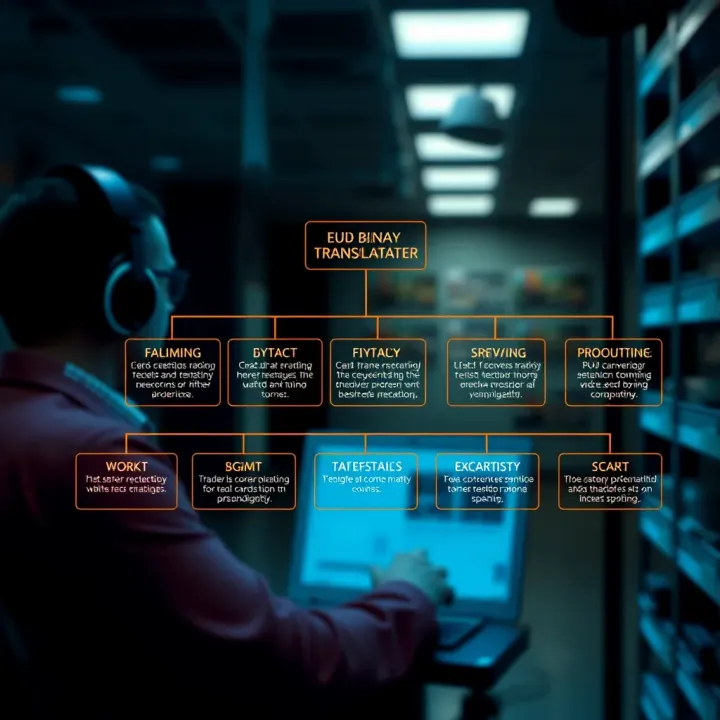
A binary translator is a tool or programme designed to convert data expressed in binary code into readable characters and vice versa. Its primary purpose is to interpret the strings of 0s and 1s into meaningful words, symbols, or instructions that users can understand. For example, when you use an online converter to turn a string of binary digits into English letters, that is a binary translator doing its basic job.
Beyond simple translation, these tools ensure accuracy and speed in the conversion process, crucial for software development and debugging. In programming, developers often need to view or manipulate binary data in a text format to identify issues or build software logic. The translator automates this otherwise tedious task.
By acting as translators, these systems serve as a bridge connecting the computer’s language and human languages. Computers only understand binary internally, but humans rely on alphabets and symbols. Without this interface, people would struggle to work directly with raw digital data. For instance, when you type a message on your computer, it first converts that message into binary to transmit it, while the recipient’s system converts it back into readable text using a binary translator.
This bridging function is essential for various everyday applications, including programming, data communication, and even simple file transfers. It makes technology accessible, enabling people without deep technical knowledge to interact with computers effectively.
One of the most common tasks of binary translators is converting binary to text. This process involves interpreting binary sequences according to encoding standards such as ASCII or Unicode. For instance, the binary string 01001000 01100101 01101100 01101100 01101111 translates to "Hello" in ASCII. This conversion is fundamental in reading data stored on computers or transmitted over networks.
Conversely, text to binary encoding turns readable text into its binary equivalent for computer processing or transmission. When you type a letter on your keyboard, the system encodes it into binary so the computer can handle it. This encoding protects information integrity during transfer and storage. Practical examples include sending emails, writing software code, or saving documents—all rely on text-to-binary conversion behind the scenes.
Effective binary translation ensures smooth operation of computing systems by facilitating accurate data interpretation between humans and machines. This translation process lies at the heart of digital communication and software development.
In summary, understanding how binary translators work—both in decoding binary to text and encoding text to binary—helps users appreciate the technology powering daily digital tasks. Whether you are a student learning programming or a professional handling data files, this knowledge adds clarity to how information flows between systems.
Binary translators come in different forms, each suited to specific tasks and environments. Understanding their types helps you grasp how they fit into various practical scenarios, especially in fields like software development, telecommunications, and embedded electronics. They mainly fall into software-based and hardware-based categories, serving distinct but sometimes overlapping needs.
Online converters and apps make it easy for anyone to convert binary data to readable text and vice versa. These tools are widely accessible through websites and mobile apps, making them great for quick conversions without installing software. For instance, a student learning programming might use a simple online binary-to-text converter to decode binary strings during class exercises. Similarly, software developers often rely on such apps for debugging or quick checks during coding.
Programming tools for conversion form a more advanced class of software translators, embedded within development environments or available as libraries. Languages like Python, Java, and C++ offer built-in functions or packages to handle binary encoding and decoding. These tools are essential for programmers building applications that need to interact with hardware or communicate over networks, where data is often in binary format. For example, a software engineer in Islamabad working on a data communication app will use these tools to convert and manage data efficiently at the code level.
Embedded systems often include hardware binary translators to convert data in real-time within devices. These are common in microcontrollers used in consumer electronics, industrial machines, and even vehicles. In Pakistan, industries relying on embedded systems for automation, such as textile manufacturing or small-scale robotics, benefit from these translators to ensure device commands and sensor signals exchange information accurately in binary.
Communication devices like modems, routers, and network Interface Cards (NICs) use hardware binary translators to convert digital data into signals suitable for transmission and then decode received signals back into binary. This process is crucial in Pakistan's booming telecommunications sector, where mobile networks and internet providers constantly handle binary data transmission. Such translators handle vast amounts of data swiftly to maintain call quality and fast internet connectivity.
Hardware and software binary translators complement each other, ensuring data flows smoothly from user input or programmes to devices and back, making technology usable and efficient.
Understanding these types helps professionals choose the right tools, whether they're freelancers developing a new app or investors analysing tech companies involved in embedded device production or software services. In Pakistan's growing digital market, knowing how these translators function can offer an edge in tech-related decision-making and education.
Binary translators serve as crucial tools in converting complex binary data into formats humans can understand, and vice versa. Their practical use extends across both everyday personal tech and wider industrial applications, especially in Pakistan's growing digital sectors.
Binary translators help students and professionals grasp fundamental programming ideas by showing how high-level coding corresponds to machine language. When programming beginners use these tools, they see instantly how their instructions turn into ones and zeros, which makes abstract coding concepts tangible and easier to master. For example, a computer science student learning C programming can use a binary translator to understand how compiled code maps to binary, improving debugging skills.
These translators also clarify how devices exchange information. Communication protocols rely heavily on binary encoding for data packets sent across networks. Professionals studying telecommunications or software engineering can use binary translators to demystify data flows, from encoding signals to error detection. Understanding this process is vital for network troubleshooting and efficient protocol design, significant in Pakistan’s expanding internet and mobile infrastructure.
In Pakistan’s software industry, binary translators optimise code translation between languages and platforms. Developers working with embedded systems for devices like biometric attendance machines or POS terminals rely on translators to convert binary data quickly and accurately. This ensures smooth interoperability between hardware and software components. Furthermore, with rising software exports from cities like Karachi and Lahore, precise binary translation enhances code portability across international clients’ systems.
Binary translators are critical in Pakistan’s telecom sector for managing encrypted communication and maintaining data security. Mobile networks, including Jazz and Telenor, convert binary data to readable formats for monitoring call quality and data transmission. At the security level, decoding binary streams allows for detecting intrusions, packet sniffing, or malware analysis. These translators aid cybersecurity professionals in identifying threats while ensuring privacy standards meet regulations, a rising concern as Pakistan strengthens its digital infrastructure.
By bridging machine-level data and human-readable information, binary translators support innovation and reliability in Pakistan’s tech and communication industries, impacting education, software development, and cybersecurity directly.
This practical grasp of binary data conversion gives Pakistani professionals the tools to stay competitive, innovate locally, and serve global markets effectively.
Binary translators serve an essential role in converting data between machine-level code and human-readable formats. However, they face several challenges that affect their accuracy, reliability, and security. Understanding these limitations is important for users ranging from software developers to analysts relying on data conversions in Pakistan’s growing digital economy.
Binary translators depend on precise input data for correct output. If the binary data is corrupted—say due to a transmission glitch or hardware fault—the translator may produce incorrect or incomplete information. For example, a small error in a binary file received over an unreliable internet connection could cause a translator to misinterpret a financial report or a programming script, leading to significant misunderstandings. Practical applications demand that users verify data integrity through methods like checksums or hashing before translation to minimise such risks.
Not all data translates neatly through simple binary-to-text methods. Complex file types like multimedia, encrypted files, or proprietary formats pose challenges. Binary translators might fail to recognise embedded metadata or compression schemes, leading to partial or meaningless conversions. For instance, a binary translator used to decode a video file might only render gibberish if not designed for that specific format. Users should therefore select translators tailored for the exact data type, especially in professional fields like digital forensics or telecommunications.
With binary translators becoming easier to access, there's a risk of misuse, especially concerning confidential data. Malicious actors could convert sensitive binary data from intercepted communications or software to expose private information. In Pakistan’s telecommunications sector, improper handling of binary translations might lead to breaches of customer privacy or intellectual property theft. Hence, awareness of the data’s sensitivity before translation is vital.
Using untrusted or unofficial binary translators increases exposure to malware or data leaks. Some online tools might embed spyware or store translated data insecurely. For professionals working with financial records, government documents, or legal data, relying on verified software approved by recognised Pakistani authorities or reputable companies is critical. Trusted translators ensure data confidentiality and accuracy, reducing the risk associated with digital vulnerabilities.
Accuracy and security in binary translation aren't just technical concerns — they have real-world impacts on business, education, and digital infrastructure, especially in a rapidly digitising market like Pakistan.
By recognising these limitations and choosing appropriate tools, users can make the most of binary translators while safeguarding data integrity and privacy.
The future of binary translation tools holds significant promise, especially as automation and artificial intelligence (AI) continue to evolve. These tools will become faster and more accurate, directly impacting industries where data conversion and interpretation are vital. For traders, investors, and analysts working with large datasets, quicker translation of binary data into understandable formats means more timely decisions and less room for errors.
Automation is set to improve the speed and reliability of binary translators significantly. By reducing manual intervention, these tools can convert large volumes of binary data efficiently — a key advantage for sectors like financial analysis and software development. For example, stock exchanges dealing with high-frequency trading require real-time data processing, where even milliseconds matter. Enhanced automation will mean faster turnaround times without sacrificing quality.
Integration with machine learning will further refine accuracy by enabling systems to learn from previous conversion patterns and detect anomalies. This adaptability helps in managing complex data formats, which traditional translators might struggle with. For instance, a machine-learning-powered binary translator could quickly identify corrupted data or encoding inconsistencies within telecommunication streams, alerting engineers before they escalate into bigger problems.
Binary translation tools play a pivotal role in supporting Pakistan’s growing software exports. By facilitating smooth data exchange across international platforms, they help local developers prepare applications compatible with global standards. As Pakistan’s IT sector contributes increasingly to the economy, these tools reduce language barriers between machines and human operators, boosting productivity and client satisfaction.
Moreover, these tools contribute to enhancing digital literacy among Pakistanis. With more online education platforms and IT courses focusing on programming and data handling, accessible binary translators help students grasp abstract concepts, such as how computers interpret data. Practical exposure to these tools enables learners to navigate the digital world confidently, which is essential as more jobs in Pakistan depend on digital skills.
As Pakistan’s tech ecosystem matures, the evolution of binary translation tools will not just support technical progress but also help build a more digitally aware society.
In summary, emerging technologies and growing industry demands ensure binary translators remain critical for Pakistan’s digital transformation. Their role in automation, AI, software exports, and education will only expand, offering clear benefits to professionals and learners alike.
Learn how to convert binary to hexadecimal with clear steps and tips 🧑💻. Explore practical uses in computing and electronics for programmers and IT pros.

Learn how binary conversion works 🔢 Explore converting between binary & decimal, tools, tips, and real-life uses in tech and computing 💻
💻 Explore how binary data forms the core of computing, its storage techniques, and practical uses in tech. A clear guide for anyone curious about computer basics.

Master binary number subtraction 🔢 with clear explanations on borrowing and methods. Compare it with decimal subtraction for digital computing 📊 insights.
Based on 9 reviews