

Binary Compounds: Formation, Types, and Uses
🔬 Explore how binary compounds form, their types—ionic vs covalent—their properties, naming rules, and uses in daily life and industry insights.
Edited By
Emily Carter
Binary trees are a basic yet powerful data structure in computer science. They organise data hierarchically, allowing quick search, insertion, and deletion. This makes them valuable for programmers, traders, and analysts handling large datasets.
At its simplest, a binary tree comprises nodes where each node has at most two children. These children are called the left and right child, forming a structure that resembles an inverted tree, starting from a root node.
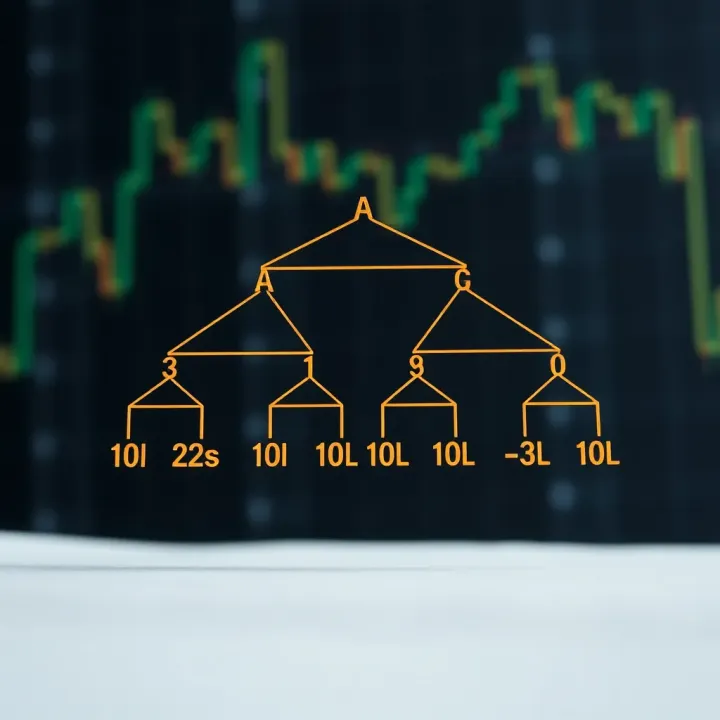
Different types of binary trees vary based on their shape and how nodes are arranged. Knowing these types helps in choosing the right structure for the task, optimising performance whether it's for searching financial records or managing inventory.
Understanding the properties of each binary tree type helps improve algorithm efficiency and data handling in diverse applications.
Here’s a quick overview:
Full Binary Tree: Every node has either zero or two children. This strict structure makes it predictable and easy to traverse.
Complete Binary Tree: All levels are fully filled except possibly the last, which fills from left to right. This balance helps in implementing heaps.
Perfect Binary Tree: Both full and complete at the same time — all interior nodes have two children, and all leaves are at the same depth.
These foundational types lead to more specialised trees:
Binary Search Tree (BST): Nodes arranged so that the left child is smaller, and the right child is larger than the parent. This order speeds up search operations.
AVL Tree: A self-balancing BST variant, maintaining height balance to avoid performance drops during insertions or deletions.
Practical examples include using BSTs for stock market data searches or AVL trees in databases where frequent updates happen. In contrast, heaps (a type of complete binary tree) power priority queues for task scheduling.
Exploring these structures reveals their impact on speed and resource use, especially relevant for developing efficient software and data analysis tools in Pakistan’s tech landscape.
Understanding the basics of binary trees is essential for anyone working with data structures, especially in computing and programming fields. It lays the foundation for grasping how data is stored, accessed, and manipulated efficiently. Without a clear understanding of the fundamental concepts, one cannot appreciate the utility and the variations that binary trees offer.
A binary tree is a hierarchical data structure where each node can have at most two children, commonly called the left and right child. This restriction differentiates it from other tree types and allows for efficient traversal and search algorithms. In practical terms, knowing this helps when applying binary trees in scenarios like expression evaluation or database indexing.
Nodes are the fundamental units storing data or values. The connections between these nodes are called edges, representing relationships such as parent to child. Levels indicate how deep a node lies within the tree, starting from level 0 at the root. For example, understanding levels aids in algorithms that process nodes based on their depth, like breadth-first search.
The depth of a node refers to the number of edges from the root to that node, while the height refers to the longest path from a node to its furthest leaf. These measurements impact performance; for instance, a tree with lesser height generally allows quicker search operations due to fewer steps required to reach a target node.
Binary trees organise data in a way that makes insertion, deletion, and lookup operations more efficient compared to linear structures. For example, in file systems or databases, binary trees help maintain ordered data enabling quicker access and modification.
Binary Search Trees (BST), a variant of binary trees, allow searching for elements in logarithmic time by exploiting their sorted nature. Unlike arrays or lists, BSTs can dynamically adjust with insertions and deletions without the need for expensive reordering operations.
In compilers and calculators, binary trees represent arithmetic expressions where internal nodes are operators and leaves are operands. This structure facilitates parsing and evaluating expressions in the correct order, handling operator precedence naturally.
Understanding these basics is key to recognising which binary tree type suits your specific programming or data handling needs, making your solutions efficient and practical.
Understanding common types of binary trees is essential for anyone working with data structures. These basic forms serve as building blocks for more complex trees and algorithms, impacting performance and memory usage. Traders and financial analysts, for instance, can appreciate how binary trees organise data efficiently, supporting fast lookups and computation.
A full binary tree is a tree where every node has either zero or two children. This means no node has only one child; it’s either a leaf or a branching point. This strict structure makes full binary trees particularly simple to analyse.

For example, in a trading system storing pairs of buy and sell orders, a full binary tree can represent these well, ensuring every decision node splits into two clear outcomes.
Full binary trees provide simplicity and predictable shape, which helps in certain recursive algorithms. Because all nodes follow the zero-or-two-child rule, navigating or traversing such trees is more straightforward.
However, they can become inefficient if the dataset doesn’t naturally split evenly. For instance, if your data grows unevenly, full binary trees can waste space or require complex restructuring to remain balanced.
Complete binary trees are filled level by level, left to right, with the last level allowed to be incomplete but filled from the left. This makes them very useful for representing heaps, a key structure in priority queues.
In financial applications like real-time market data feeds, heaps organise events by priority or timestamp, making complete binary trees a handy foundation due to their compact and orderly nature.
Unlike full binary trees, complete binary trees allow nodes to have one child if it’s on the last level, as long as nodes fill from the left. This flexibility makes complete binary trees more adaptable to real-world data that doesn’t divide neatly.
While both structures have hierarchical balance, complete trees tend to use memory more efficiently and fit naturally with array-based storage, which benefits programmers managing large datasets.
A perfect binary tree is fully balanced: all internal nodes have two children, and all leaves sit at the same depth or level. This symmetry matters when uniform processing or minimal height is desired.
For instance, in algorithmic trading, where quick decision trees reduce latency, perfect binary trees minimise traversal time and guarantee balanced workload distribution.
Perfect binary trees underpin divide-and-conquer algorithms, such as merge sort or binary search, where equal partitioning is key. They ensure log-scale performance, which is vital when handling big datasets like stock prices over years.
They are also used in network routing and game theory, where consistency in branching reduces complexity and improves predictability.
Remember: Choosing the right binary tree type directly affects how efficiently you process and analyse data. Full, complete, and perfect trees each have roles depending on your data shape and performance needs.
Full trees suit strict binary splits.
Complete trees suit priority-based storage.
Perfect trees excel in balanced algorithm designs.
Understanding these will help you select the best fit for your problem.
Specialised binary tree variants build on basic binary tree structures to offer more efficient ways of organising and accessing data. These trees are tailored to specific performance needs, such as faster lookups, balanced data distribution, or prioritised access. Whether you are coding a database index or implementing memory management, knowing these specialised trees helps you choose the right tool for your application.
A binary search tree (BST) arranges nodes so that the left child contains a smaller value and the right child a larger value than the parent. This organisation lets the tree maintain a sorted order naturally. For example, if you insert numbers 30, 10, and 50 into a BST, 10 will be left of 30 and 50 will be on the right. This layout simplifies searching because you eliminate half the tree at each step, just like looking up names in a phone book.
BSTs are widely used for searching tasks because they offer efficient average-case performance—search, insertion, and deletion generally work in O(log n) time if the tree is balanced. However, if the tree becomes skewed, these operations degrade to O(n). In sorting, an inorder traversal of the BST delivers elements in ascending order automatically, reducing the need for extra sorting algorithms.
Balance in a binary tree keeps operations efficient. Without it, worst-case scenarios lead to long chains of nodes, causing slower searches and inserts. Balanced trees automatically adjust to maintain a roughly equal number of nodes on each side, minimising height and keeping operations closer to O(log n). This is especially helpful in databases and real-time systems where speed is crucial.
AVL trees guarantee strict balance by ensuring the height difference between left and right subtrees of any node does not exceed one. After every insertion or deletion, they perform rotations to restore balance. This strictness translates to faster lookups but comes with added overhead in maintenance, making them popular in applications where quick search time outweighs insertion cost.
Red-Black trees relax the balancing rules compared to AVL trees but still guarantee log-square height. They colour nodes red or black to enforce balance properties during insertions and deletions. This method reduces balancing overhead, allowing faster insertions and deletions while maintaining good search performance. Many programming language libraries and file systems use red-black trees for this reason.
Heap trees organise nodes so that every parent’s value is greater than (max-heap) or less than (min-heap) its children. This structure doesn’t maintain order between siblings but ensures the root node holds the maximum or minimum value. For instance, a max-heap is useful if you want quick access to the largest element without sorting the whole dataset.
Heaps are the go-to data structure for priority queues, where elements need to be processed based on priority rather than order of arrival. For example, operating system schedulers use heaps to decide which process gets CPU time next. In finance, heaps can manage urgent transactions or trade orders that require immediate processing, ensuring the highest priority items get attention first.
Understanding these specialised binary tree variants helps you design better algorithms and write optimised code for tasks ranging from search engines and databases to priority scheduling in operating systems.
Choosing the right binary tree type and managing its implementation well are crucial for efficient computing. Knowing the practical aspects helps optimise performance, reduce memory usage, and ease maintenance challenges.
Performance needs often dictate the binary tree structure. For example, a binary search tree (BST) speeds up search operations by keeping data sorted, which suits applications like database indexing or real-time analytics. However, if the data changes frequently, a self-balancing tree like an AVL or red-black tree helps maintain quick access by preventing the tree from becoming skewed, thus avoiding worst-case search times.
In contrast, heap trees excel in scenarios needing quick access to the largest or smallest element, such as priority queues in task scheduling or network packet management. Understanding how each type performs under your application's demands prevents bottlenecks.
The memory footprint also influences your choice. Full or perfect binary trees waste space if the data is sparse, while complete binary trees offer a balance by filling levels left to right. Implementing a heap with an array instead of nodes reduces memory overhead and pointer management, which is handy for embedded systems or mobile apps with limited RAM.
Complex balanced trees like AVL require extra memory to store balance factors, and their insertion/deletion logic is more complicated. Developers should weigh whether available resources justify the added complexity, especially for applications running on less powerful devices or environments with strict memory limits.
Traversal algorithms—such as in-order, pre-order, post-order, and level-order—are fundamental for accessing or modifying tree data. For example, in-order traversal of a BST retrieves data in sorted order, useful when generating reports or exporting data.
Level-order traversal is helpful for breadth-first processing, say, in network buffering or job scheduling. Knowing these traversal methods helps in designing algorithms that marry efficiency with the tree’s structure.
These operations affect tree balance and speed. In a BST, simply inserting nodes without care can degrade performance into that of a linked list if the tree becomes unbalanced. Balanced trees use rotations during insertions and deletions to keep height minimal, ensuring search efficiency.
Practical use demands understanding these mechanisms; otherwise, tree operations might slow down critical processes such as real-time data feeds or financial transaction logs.
Imbalance in binary trees slows down operations, sometimes dramatically. While balanced trees offer solutions, managing their rotations and restructuring requires careful coding. Without it, applications could face delays, which is not acceptable in time-sensitive fields like stock trading or machine learning.
Imbalanced trees can cause search times to degrade from O(log n) to O(n), turning efficient data operations into costly mistakes.
Maintaining balanced trees involves intricate algorithms for rotations and rebalancing, raising development costs and bug risk. Frequent insertions and deletions, such as in dynamic datasets, increase this burden.
Developers often resort to simpler tree types or external libraries with tested implementations to reduce this maintenance complexity. Choosing the right support tools and libraries eases long-term project sustainability while ensuring performance standards.
Understanding these practical considerations is essential for anyone aiming to use binary trees effectively in programming, whether working with databases, financial systems, or software development projects that rely on structured data management.
🔬 Explore how binary compounds form, their types—ionic vs covalent—their properties, naming rules, and uses in daily life and industry insights.
Explore balanced binary trees 🌳: learn what makes them special, how to check and maintain balance, and where they're used in real-world tech applications.

Explore how binary counters work and their types in digital electronics ⚙️. Learn design tips & troubleshooting for practical uses in circuits and devices 🔧.

Explore the fundamentals of binary relations in math 📊, their key properties, types, and real-world uses in discrete math and computer science 💻.
Based on 15 reviews