

Binary Options Trading Guide for Pakistani Traders
📊 Explore binary options trading in Pakistan with our detailed guide! Learn how it works, risks involved, legal tips, top platforms & smart strategies.
Edited By
David Spencer
Managing money well is the backbone of successful binary options trading. Many traders jump into the market with high hopes but end up losing capital because they don’t keep track of their trades or control their risks properly. This is where a money management sheet plays an important role.
A money management sheet is a simple tool to record, monitor, and analyse your trading activities. It helps you see how much you invest per trade, your wins and losses, and how your balance changes over time. Without this organised approach, you might repeat the same mistakes or expose your capital to unnecessary risks.
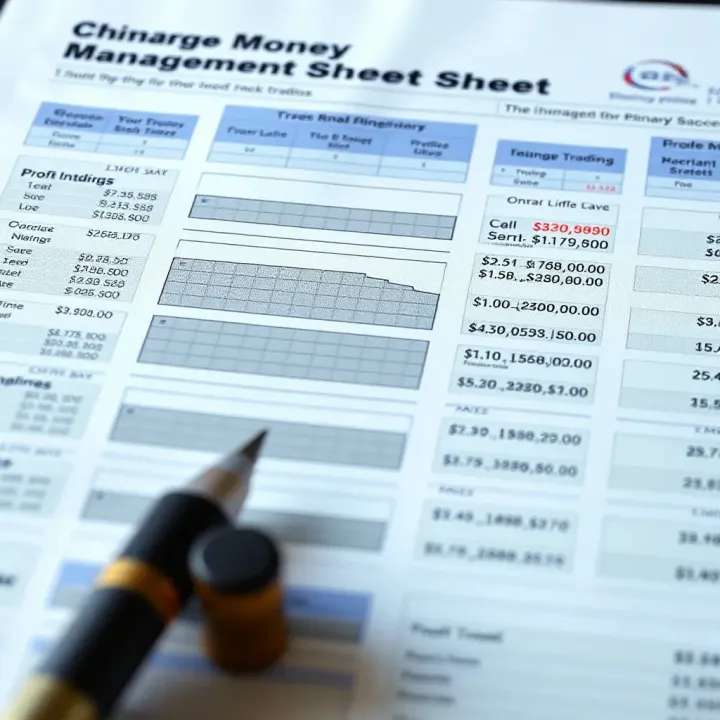
Keeping this sheet up to date encourages discipline—something many traders lack. When you see real numbers in black and white, it becomes easier to stick to your trading plan and avoid impulsive decisions. For example, if your sheet shows that you have already lost Rs 50,000 this week, you might decide to pause and rethink rather than chasing losses blindly.
Importantly, the sheet should track key details such as:
Trade amount and expiry time
Type of binary option (call/put)
Entry price and exit price
Profit or loss on each trade
Cumulative profit/loss
Risk-to-reward ratio
By recording these data points, you can analyse patterns over time. You might discover you do better with short expiry times or on specific assets, or that your losses spike when you overtrade after a winning streak. Such insights lead to smarter decisions and protect your capital.
Consistent record-keeping is not just a habit but a crucial safeguard in preserving your trading capital and improving your results.
This article will guide you on how to set up this money management sheet tailored to binary trading, show practical examples, and explain how to use it to control risk effectively. Traders with even a modest starting capital will find this approach helpful to shield themselves from heavy losses and improve profitability step by step.
Creating and maintaining a money management sheet plays a vital role in succeeding at binary trading. This simple yet effective tool helps traders keep a close eye on their finances, prevent rash decisions, and improve their overall strategy with data-backed insights.
Binary trading involves quick decision-making and high volatility, which can quickly drain your capital if you're not cautious. A money management sheet allows you to set clear limits on how much you risk per trade. For instance, if you decide to risk only 2% of your total trading capital on each trade, your sheet will track this strictly, preventing you from making overly risky bets out of impulse. This method guards your funds from rapid depletion and gives you more breathing room to recover from losses.
Consistency separates successful traders from casual ones. By logging every trade systematically, a money management sheet forces discipline and helps standardise your approach. For example, you might notice that sticking to smaller trades with controlled risk yields better long-term results than chasing bigger payouts unpredictably. This disciplined record keeps your trading steady over time, avoiding the wild fluctuations that often lead to burnout or complete losses.
Tracking every trade helps uncover patterns that work best. You can analyse which assets, expiry times, or market conditions tend to give higher returns. Suppose you find that binary options on currency pairs like USD/PKR perform better during specific economic announcements; your sheet will reveal this trend. This insight lets you focus your efforts on strategies that genuinely add value instead of guessing blindly.
No trader is perfect, but without detailed records, mistakes tend to repeat unnoticed. Your money management sheet can flag recurring errors such as trading during volatile market hours when spreads widen or placing too many trades back-to-back out of frustration. For example, seeing a string of losing trades correlated with poor market conditions prompts you to pause or adjust your strategy next time. It also helps you reflect on your emotional state during trades, encouraging self-awareness to better control impulses.
Keeping detailed records with a money management sheet is like having a personal accountability partner that keeps your trading disciplined, your risks under control, and helps you constantly improve.
By focusing on these practical aspects, a money management sheet becomes an indispensable part of any trader's toolkit, especially in binary trading where fast decisions and strict discipline are critical.
A well-organised money management sheet is essential to keep track of your binary trades effectively. It helps you clearly record vital details, calculate your financial outcomes, and reflect on market behaviour and your own trading decisions. Without the right components, managing your capital and assessing your strategies becomes guesswork rather than fact-based tracking.
Recording the date and exact time of each trade is more than just formality. Markets fluctuate throughout the day, and certain hours may present better trading conditions. For instance, volatility might peak during overlapping trading sessions of major currency markets. Logging this information helps you spot patterns over time, like whether you perform better in morning trades or evening.
Tracking which asset or currency pair you trade on is crucial. Each asset behaves differently under various market conditions. For example, the USD/PKR pair is influenced heavily by political announcements and economic policies in Pakistan, while commodities like gold may respond to global demand and currency strength. Recording this lets you analyse which assets yield consistent profits and which give you trouble.

You must note if you purchased a call option (betting on price rise) or a put option (expecting price fall). This clear distinction aids in evaluating your directional accuracy over time. Maybe your call trades succeed more than put trades, signalling strength in spotting upward trends. This insight allows tailoring your strategy accordingly.
Every trade starts with an entry amount—the capital you risk—alongside the possible payout percentage offered by your broker. For example, you might invest Rs 5,000 with a 75% payout; if the trade wins, you earn Rs 8,750 back (capital + profit). Logging these figures is vital to understand the risk-reward balance of each trade.
This shows the actual money gained or lost on a trade after payout. For instance, winning a Rs 5,000 trade with 75% payout nets Rs 3,750 profit, while a losing trade means losing the entire Rs 5,000. Tracking these results helps calculate your overall success rate and return on investment.
Adding each trade’s net result to your running balance keeps you aware of your fund status. This real-time view shows whether your trading is growing or shrinking your capital. Without it, you risk overspending beyond your risk tolerance or missing early signs of a losing streak.
Briefly noting market events or conditions during a trade adds important context. For example, was the market volatile due to a State Bank of Pakistan announcement or political unrest? Such notes help in cross-referencing your strategy effectiveness against market scenarios.
Recording the specific strategy employed—like trend following, range trading, or news-based trading—helps assess what works for you. Over time, you might find your success rate with certain strategies varies noticeably, allowing you to focus on strengths.
Binary trading success depends on discipline, not just skill. Jotting down your emotional state—confident, anxious, or impulsive—helps identify if feelings influenced your decisions. Such awareness can prevent reckless trades triggered by frustration or overconfidence.
Maintaining these key components in your money management sheet creates a complete picture of your trading activity, enabling smarter decisions and better capital preservation.
Creating a money management sheet is essential for tracking your binary trading activities effectively. It helps maintain discipline, control risk, and make informed decisions based on past performance. This guide explains how to set up a clear, practical sheet tailored to your trading style.
Excel and Google Sheets remain popular choices because they are versatile and widely accessible. You can customise them easily, add columns for different data points, and use formulas to automate calculations. Dedicated apps designed for traders also exist, offering features like real-time data syncing, alerts, and visual summaries. However, these often come with subscription costs.
Digital record-keeping has clear advantages. It minimises human error compared to manual logs and speeds up updating after every trade. For example, Google Sheets allows automatic saving, so you never lose your data, even if your computer shuts down unexpectedly. Plus, cloud storage means you can access your sheet from multiple devices—your phone on a commute or your desktop at home. This flexibility is quite useful given how dynamic binary trading can be.
Organisation is key here. Set up columns for trade date, asset name, entry amount, payout, net profit/loss, and running balance. Keep rows for individual trades. This clear structure means you can glance quickly to understand your trading activity each day.
Use formulas to reduce manual work and errors. For instance, Excel’s SUM and IF functions can calculate your running balance and show profits or losses per trade automatically. This helps keep numbers accurate and saves time, especially when you have dozens of trades in a week.
Logging every trade immediately is vital. Delay in recording can lead to forgotten details and mistakes. The habit of entering data right after closing a trade ensures the record stays accurate and current. For example, noting down the market condition or your emotional state alongside financial data might shed light on successful or poor trades later.
Regularly reviewing overall progress helps identify patterns in your trading. Set weekly or monthly check-ins to analyse which strategies are working and where adjustments are needed. This reflection, supported by your money management sheet, prevents repeated mistakes and sharpens your approach over time.
A well-maintained money management sheet becomes your personal trading diary—helping you stay disciplined, make better decisions, and protect your capital through informed risk management.
Protecting your capital is the foundation of sustainable binary trading. Without sharp money management strategies, even the best trading skills can lead to heavy losses. This section discusses practical methods to safeguard your funds while keeping you in the game longer.
Traders often cap their risk on any single trade to a fixed percentage of their total capital. Commonly, this limit ranges between 1% and 5%. For example, if you have Rs 100,000 for trading, risking 2% means you only put Rs 2,000 at stake on one trade. This approach limits the damage from a losing streak and prevents rapid depletion of your funds.
Adjusting your risk as trading performance changes is also vital. If you start experiencing continuous losses, lowering your risk per trade can help conserve capital. On the other hand, a consistent winning period might allow you to slightly increase the risk percentage, aiming for better returns. This flexible approach respects market realities rather than sticking rigidly to a fixed number.
Spreading trades across different assets reduces reliance on the performance of a single market. For instance, mixing trades on forex pairs like USD/PKR with indices or commodities can balance the risks due to their varied behaviours. This prevents heavy losses if one segment faces sudden volatility.
Varying the expiry times of your binary options is another way to diversify risk. Instead of placing all trades with one expiry, using short-term and medium-term expiries allows you to capitalise on different market movements. This prevents all investments from being exposed to the same market moment, lowering the chance of simultaneous losses.
While traditional stop loss orders are not always available in binary trading, the principle of limiting downside remains crucial. You can assign a maximum daily loss limit—once reached, trading stops for the day. This intentional pause prevents emotional decisions after losses and protects your capital.
Securing gains by setting take profit targets helps lock in earned profits. For example, if your portfolio gains Rs 10,000 in a session, you might stop trading or reduce position sizes. This prevents greed-driven trades that can turn profits into losses rapidly.
Money management is not just about making profits but about avoiding catastrophic losses. Following these strategies consistently can help you stay in control and trade more confidently.
Adopting these practical money management strategies, including risk limits, diversification, and controlled profit-taking, is essential for any trader serious about protecting and growing their capital in binary trading.
Mistakes in binary trading often lead to heavy losses and frustration, especially when they repeat unnoticed. A money management sheet plays a critical role in preventing common pitfalls by providing a clear, organised record of your trades and decisions. Its value lies not only in tracking numbers but also in reinforcing disciplined trading habits and highlighting behavioural patterns that affect outcomes.
Emotional trading happens when you let feelings guide your decisions rather than logic and strategy. For example, after a string of losses, a trader might increase their stake size recklessly in an attempt to recover quickly. This behaviour, known as "chasing losses," can drain your capital fast. It’s a common trap, especially in binary options where the outcomes depend on predicted price movements within short expiry times.
Emotions like frustration and impatience often push traders away from their planned risk limits. They might ignore their previous losses and commit more funds without a clear strategy. Recognising these patterns is the first step to avoiding costly mistakes.
A money management sheet sets clear boundaries by tracking every trade, including the stake size and losses. When a trader sees their running balance and cumulative losses documented, it becomes harder to ignore reality and chase bad trades mindlessly. For example, setting a maximum daily loss limit in the sheet forces a pause once losses cross a safe threshold.
Referencing the sheet before each trade encourages sticking to predefined risk levels. Over time, this record discourages emotional trading by turning abstract feelings into concrete numbers. Traders learn to respect their limits and trade with measured confidence, preventing impulsive bets when shaky.
Skipping the habit of reviewing trade records means missing out on important insights. If you don’t record every trade detail — asset, expiry time, strategy, profit or loss — it’s difficult to spot what’s working or failing consistently. For instance, a trader may unknowingly lose repeatedly on certain currency pairs or during volatile market hours.
These patterns only emerge when trade data is carefully analysed. Ignoring records can keep you stuck in losing cycles, repeating errors without awareness. Concrete examples help: if your money management sheet shows losses piling up in bearish conditions, that’s a clear signal to rethink your approach.
Regularly going over your management sheet unlocks opportunities to improve your tactics and manage risks better. Weekly or monthly reviews help identify profitable strategies and those to drop. They also reveal whether you meet your risk and profit targets or deviate dangerously.
Reviewing data builds self-awareness and accountability. It reminds you where money was lost due to overconfidence or poor timing. Consequently, your trading becomes sharper and more informed. Over time, this habit translates into steadier gains and stronger capital preservation.
Keeping a detailed, updated money management sheet is not just bookkeeping; it's your best defence against emotional mistakes and unconscious patterns that can drain your trading funds.
📊 Explore binary options trading in Pakistan with our detailed guide! Learn how it works, risks involved, legal tips, top platforms & smart strategies.

📈 Explore binary option trading in Pakistan with our practical guide covering strategies, risks, legalities, and tips for secure trading platforms.

📊 Learn effective binary options trading strategies tailored for Pakistan! Master risk management, technical analysis, and boost your trading success today.

Explore how binary options trading works in Pakistan 🇵🇰, understand legal rules ⚖️, identify risks ⚠️, and learn steps for safer trading 💡.
Based on 8 reviews